Dungeons & Dragons vs Pathfinder
July 20, 2020 · 9 min read
Dungeons & Dragons and Pathfinder are both very good tabletop role-playing games. They are critically acclaimed and iconic in their own right.
In this article, we will take a quick but deep dive into both games and unravel what each has to offer. I will start with a brief history before going over the individual games. (A quick note on editions: this comparison looks at Dungeons & Dragons' fifth edition and Pathfinder's First Edition, which grew out of D&D 3.5. Pathfinder Second Edition is a separate ruleset.)
History
The two games are directly connected. It is important that we discuss their intertwined history if we are to stand any chance of truly appreciating them.
Dungeons & Dragons came first. It changed the gaming scene as we knew it and redefined role-playing. Gary Gygax and Dave Arneson grew it out of the tabletop wargames they played in the late 1960s and early 1970s, adding individual heroes, dungeons to explore, and a referee to run the world. It was first published in 1974, and the rest was, as they say, history.
Pathfinder, on the other hand, was literally a modification of Dungeons & Dragons. Paizo was the company in charge of publishing magazines about Dungeons & Dragons. However, when the license for D&D's fourth edition turned out to be far more restrictive, staff at Paizo grew concerned about the future of the game they had been supporting.
In response, they released their own role-playing game known as Pathfinder. It was a modification of the 3.5 version of Dungeons & Dragons. This action was legally allowed under the Open Game License.
The design of the game was settled using an old but effective method: democracy. A test version was presented to players, who were asked to play it and give their honest feedback on the company's website. It is on these stones that Paizo built their empire.
The Paizo team, led by Lead Designer Jason Bulmahn, wanted to keep the depth of 3.5 while smoothing out its rough edges. They felt players often lacked incentive to stick with a single class all the way through twenty levels of gameplay, so they gave every class something to look forward to at every level.
Pathfinder remained true to its word. The first game provided a whole lot more options and upgrades to abilities, not to mention boosted roles. The subsequent versions followed suit. The gameplay also got streamlined.
Since then, Pathfinder and Dungeons & Dragons have been battling it out for the top spot on the sales charts. For a stretch in the early 2010s, Pathfinder even outsold Dungeons & Dragons, a testament to how much work was put into the game. It has been a close race ever since.
Dungeons & Dragons
The basic premise of this game is this: dice are used to determine whether actions during gameplay are successful, while a storytelling referee narrates and settles disputes. Armed with this knowledge, we can now march on.
The two main developers came at the game from different directions. Gygax loved wargames and wanted a game built on a backdrop of conflict.
It was only a matter of time before he met Arneson, whose vision fitted into his own like a jigsaw piece. Arneson had an imagination like Gygax had never seen before. His appetite for never-ending gameplay complemented Gygax's war characters. Throw in the all-powerful storytelling referee, and the duo knew that they had struck gold.
The game is a combination of many things. It is not just for geeks, as many people may incorrectly assume. Quite the contrary, as a matter of fact. It involves storytelling and dialogue on an intriguing level. The Dungeon Master, as they are known, facilitates dialogue among players and is key in building the narrative of this unique fantasy lore. Every session is unique, which is why this is one game that will never bore you.
Roles of the Dungeon Master
While every player plays their part in determining the final outcome in Dungeons & Dragons, the Dungeon Master is the glue that holds the game together. Their roles include, but are not limited to:
- Guiding and building the story. They present challenges and generally ensure that the narrative flows. So, it goes without saying that they need to be a good storyteller, but I will still say it: they need to be a good storyteller.
- Refereeing. They ensure that all players adhere to the rules and dish out consequences to those who fail to do so.
- Being the oracle. Being a Dungeon Master is no small feat. You need to have a thorough command of a number of handbooks, including the Monster Manual, Player's Handbook, and Dungeon Master's Guide. These books provide the rules and information that guide the players and regulate the creation of characters.
- Resolving conflicts. The Dungeon Master mediates all disagreements in the course of gameplay.
- Improvising. They have to be able to adapt on the move in case a player makes an unexpected play. The Dungeon Master needs to be quick on their feet for the game to thrive.
- Rewarding progress. Lastly, the Dungeon Master gives players experience points based on their progress in the game. Those points are used to level up characters to make them stronger.
Characters
Playable characters are created at the start of Dungeons & Dragons. These characters are the center of the game. How strong they start off can come down to luck, because the strength of their abilities is often determined by rolling the dice.
Sorry to say, but some characters start at a disadvantage before the game has even begun. It is tough luck, but I have seen games won through sheer will and determination. Never give up. In the classic method, each ability score is rolled with three six-sided dice, giving a range of three to eighteen. (Fifth edition's standard rolling method uses four dice and drops the lowest.) The six abilities are:
- Strength: physical power, which affects how hard your character hits with many weapons.
- Dexterity: agility and reflexes, which affects stealth, aim, and how hard you are to hit.
- Constitution: toughness and stamina.
- Intelligence: reasoning and memory.
- Wisdom: perception and insight (it pretty much speaks for itself).
- Charisma: how likable and persuasive your character is, which helps with making friends and forming alliances.
So far so good, right? The basics of each character may be overwhelming at first, but they are a piece of cake once you get used to them. Other things worth noting are a character's armor class and hit points. These determine how hard it is to injure a character and how much damage they can take before succumbing, respectively.
How to play
The actual play of Dungeons & Dragons involves three parties: the player's character, the Dungeon Master, and the dice. Since we have covered how characters and the Dungeon Master play their hand, it is high time we put the dice-rolling under a lens.
When it is your turn, you describe what your character does, and the Dungeon Master tells you what to roll. The result of the roll, compared against the rules in the game's manuals, decides what happens. So, calling it a game of numbers and chance would not be far from the truth.
For example, if your character, a fighter, comes across a ghoul while minding their own business, you may elect to swing your axe and try to kill it. You will roll the dice to determine whether the swing connects or not.
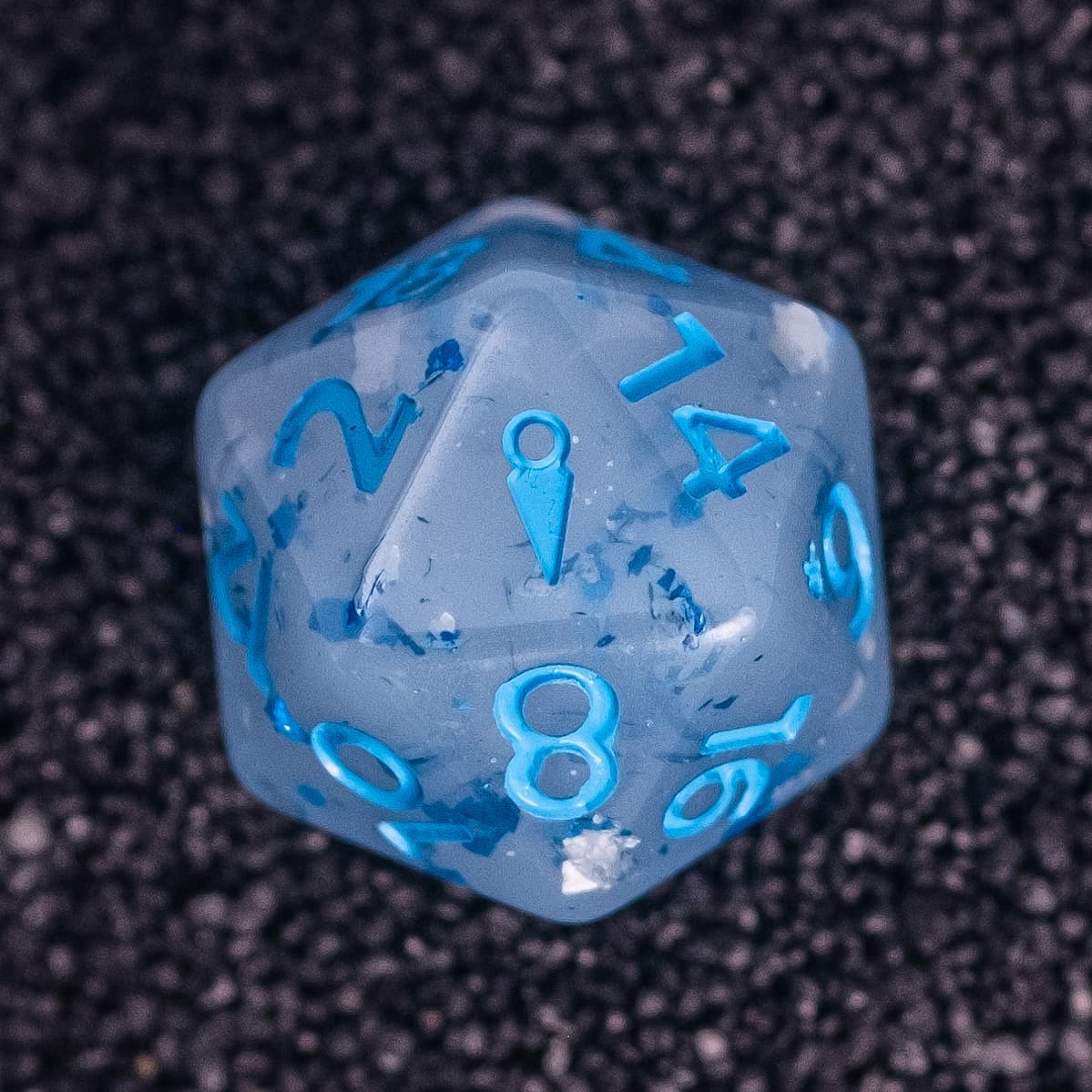
In fifth edition, ghouls have an armor class of 12. You will have to roll a 12 or more (after your bonuses) in order to land a successful hit. If you succeed, you will roll again to determine how much damage you have inflicted. I think you get the drill. (For a rundown of every die involved, see The 7 Dice You Need for Dungeons & Dragons.)
Pathfinder
You may never have played it, but I'm sure you have heard of it somewhere. Pathfinder is the game that ended Dungeons & Dragons' strict dominance of the market, even if only for a while.
The game is centered on your character and is set in the world of Golarion, where all the action unfolds. With this game, customization is so deep that tweaking a hero is like playing a separate game of its own. That is the beauty of it.
What is the point of the game? The apple never falls far from the tree, and this was certainly the case with Pathfinder. It shares a spine with Dungeons & Dragons, with storytelling and conflict-riddled adventures among the many things they have in common.
The best part? Much of it is free! Most of Pathfinder's rules, items, options, and relics are available free of charge in the Pathfinder System Reference Document.
That makes Pathfinder heaven-sent for low-budget gamers. However, serious gamers do not mind denting their wallets to buy the Core Rulebook, which comes in handy, to say the least.
This role-playing game is here to stay. Here's more about what Pathfinder has to offer and what the developers really intended to bring to the fore.
Tactical combat
You will be pleased to learn that Pathfinder has its own branded miniatures for use in the game, and they are beautifully painted. A commendable job by the manufacturers.
The game relies heavily on your tactical choices. You need to keep everybody's whereabouts in the back of your head in order to have a chance of winning. Knowing things like how far away the warlord is, or who is hiding behind the rocks, will help you make more informed decisions.
Fantasy
Pathfinder's eager fanbase was expecting lore completely out of this world when it was first launched, and boy did Paizo deliver. Golarion, the realm in which the game is set, never seems to cease to amaze. You will have to play the game yourself to really grasp the full magnitude of its high fantasy.
And if classic fantasy is not your cup of tea, Golarion has plenty of other flavors you'll enjoy. From frozen, witch-ruled kingdoms to swampy jungles and crashed spaceships, Pathfinder truly has it all.
Character customization
This is the area in which Pathfinder particularly excels. Some players enjoy creating characters more than actually playing them! How often do you hear that?
The game's system is so sophisticated and well thought through that you can be just about anybody. Want to be a monk? You got it. How about a sword-swinging magus or a gunslinger? Go right ahead. Cleric, wizard, rogue, or something far stranger: Pathfinder has it all.
People who will enjoy these games
As I mentioned earlier, Pathfinder was a modification of Dungeons & Dragons. The two may not share a fanbase per se, but the interest cuts across. If you love one, you will love the other, or at least appreciate it. Understanding how one works also gives you an upper hand when you are introduced to the other. It kind of reminds me of the relationship between PlayStation and Xbox.
In fact, the first version of Pathfinder was made to be backward compatible with Dungeons & Dragons 3.5. Pathfinder is admittedly more mechanically complex, but they share the same roots. They just happened to branch in different directions.
With that said, I feel that lovers of the following will have an easy time getting into both Pathfinder and Dungeons & Dragons:
- Fantasy
- Pirates
- Greek mythology and mythical creatures
- The art of war
- Problem-solving
- Science fiction
- Ancient history
- And lastly, dragons, of course
The most important thing is to share this experience with loved ones. Gather your friends to play and watch yourselves create a truly wonderful story. Don't forget to have a lot of fun along the way!