Are Handmade Dice Worth the Cost?
September 17, 2020 · 4 min read
Why would you pay over $100 for a set of handmade dice when you can purchase a set of acrylic dice for under $10? It's mostly a question of personal taste, and I would compare it to clothing. There are those who are happy to wear big box store clothes and others who will only wear name brands. Neither is wrong!
But those who pay more for their clothes would argue that the added cost comes with extra benefits, whether that is quality, prestige, or something else, and it can be justified for them. Can the same be said for a set of homebrewed dice?
After all, won't a set of factory dice and a set of handmade dice have the same outcome when rolled? There's no extra benefit in performance for the added cost, and yet the number of makers crafting handmade dice has grown substantially in the last few years. And, as most would know, if there is supply, there is most likely demand.
So, I think the best way to answer this question is to look at it in two parts:
- Why are homebrewed dice so expensive?
- Is the cost of handmade dice justified?
Why are homebrewed dice so expensive?
Since we've made our own handmade dice, we can tell you exactly where the money goes. It comes down to three things.
Tools and equipment
Before a single die is poured, a dice maker needs a surprising amount of gear. A pressure pot to squeeze bubbles out of the resin, an air compressor to run it, silicone molds (or the master dice and silicone to make your own), a digital scale, mixing cups, and a vacuum chamber if you're serious about bubble-free molds. Then comes finishing: sandpaper in a dozen grits, a polishing wheel, and the paint or ink used to fill the numbers. A starter setup can easily run several hundred dollars before you've made anything you can sell. If you're curious what that looks like in practice, our Ultimate Guide to Making Dice at Home walks through all of it.
Cost of supplies
Good casting resin isn't cheap, and neither are the things that make handmade dice special: mica powders, alcohol inks, glitter, foil, and inclusions like flowers or tiny charms. Silicone molds also wear out over time and need replacing. On top of that, not every pour succeeds. A bubble on a face, a cloudy cure, or a number that won't ink cleanly means that die (and sometimes the whole set) goes in the reject pile, and those materials are lost.
Time
This is the big one. A factory can turn out thousands of identical dice an hour. A handmade set takes days. The resin needs to cure, often for 24 hours or more, before the dice can be demolded. Then each die is sanded flat, polished face by face, inked, and cleaned, all by hand. Depending on the design, a single set can take several hours of hands-on work spread over a week. When you pay for handmade dice, most of what you're paying for is that time.
Is the cost of handmade dice justified?
That depends on what you want from your dice. Here's the case for it.
Aesthetic over utility (it's art)
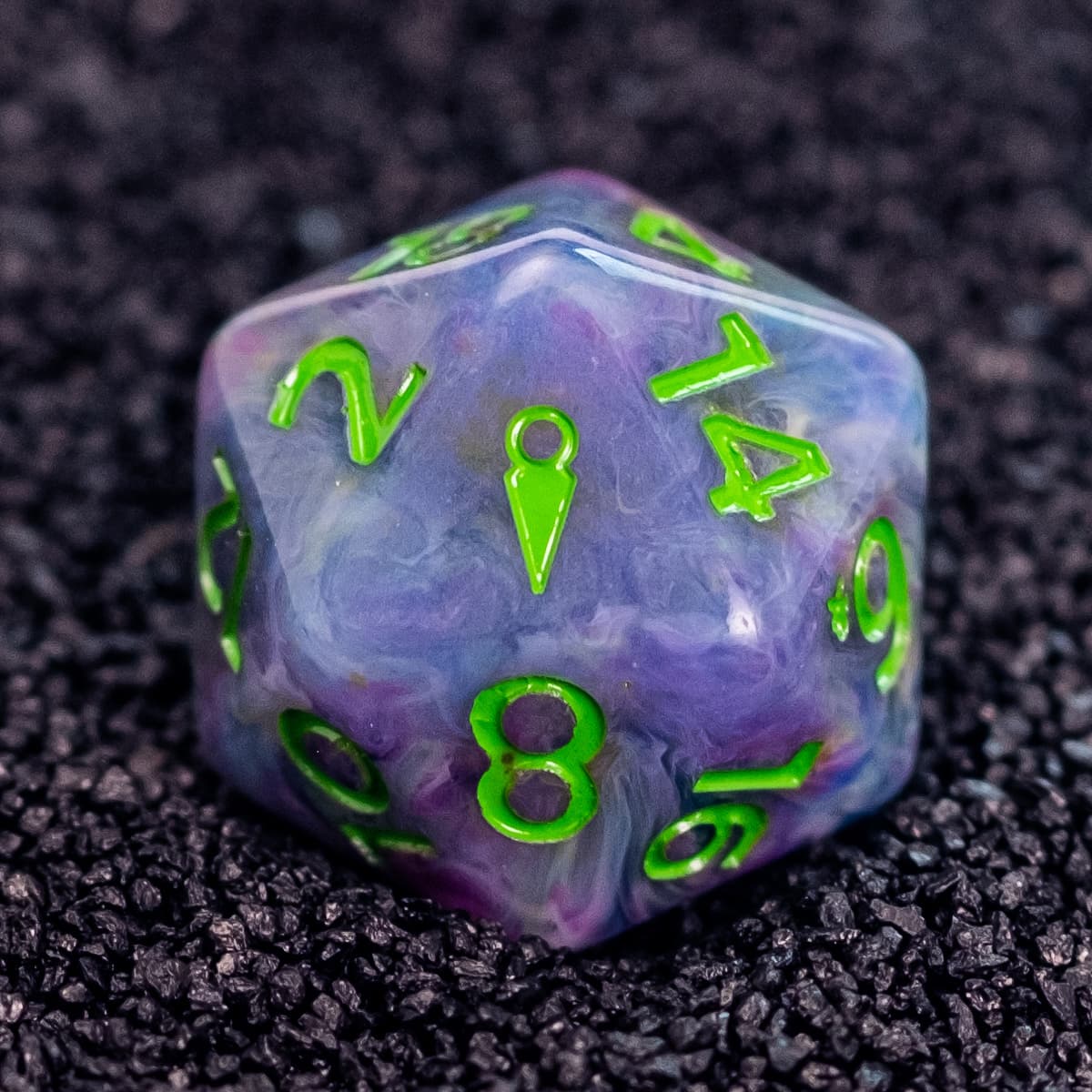
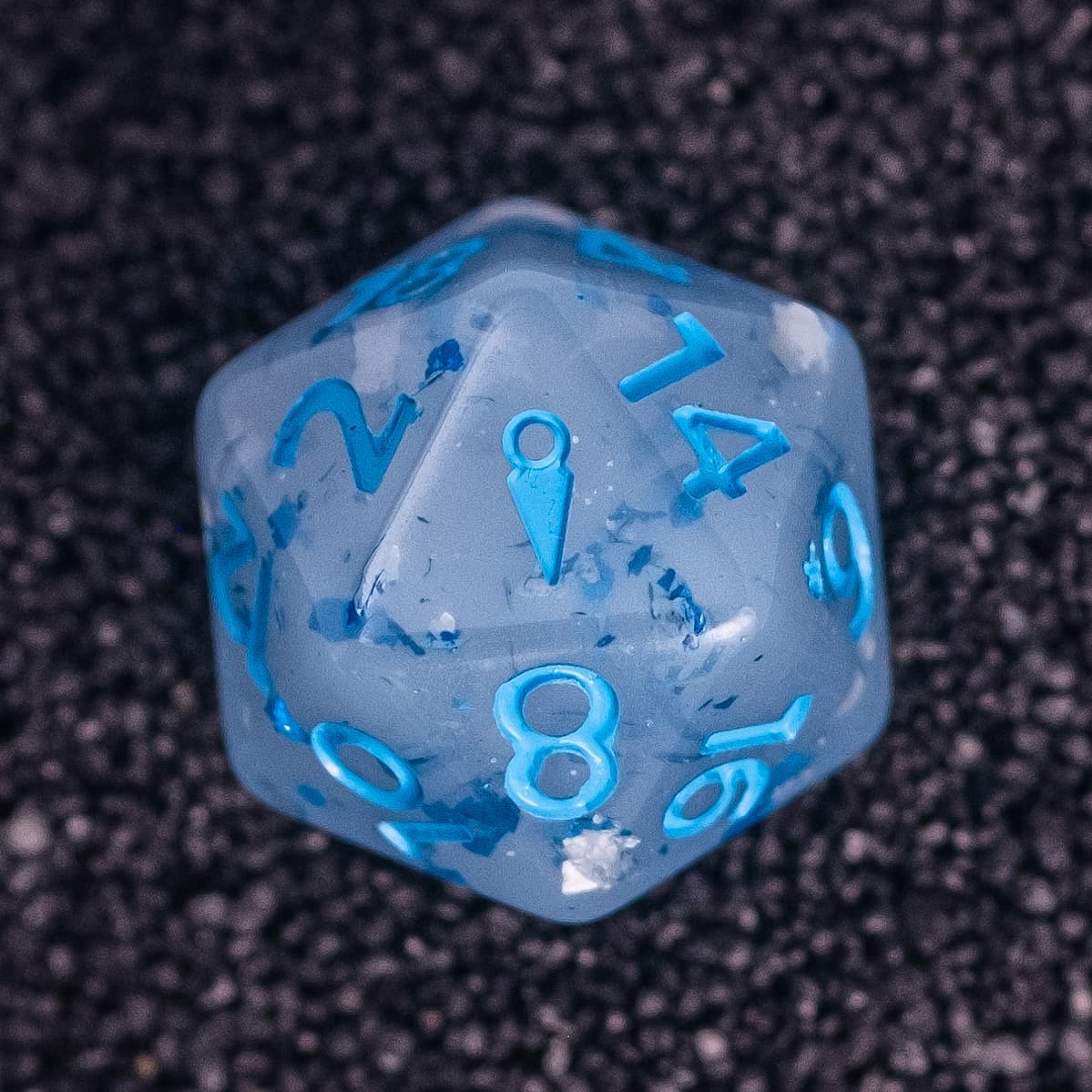
A handmade set is closer to a piece of art than a game component. Makers can do things that mass production simply can't: layered swirls, suspended inclusions, sharp edges, color shifts, one-off pours that will never be repeated exactly. If you love the way your dice look every time you pick them up, that feeling is a real part of the value.
Supporting small business
Most handmade dice come from independent makers working out of a spare room or garage. Buying from them supports someone doing what they love and keeps the hobby full of creative, unusual designs that would never come out of a factory.
Handcrafted quality
Many handmade sets are sharp-edged and individually sanded, which some players feel gives a crisper, more even roll than tumbled, rounded factory dice. You also know a person inspected every die before it went in the bag. Just remember that handmade doesn't automatically mean perfectly balanced, so look closely at the faces and numbers before you buy.
Is there a middle ground?
There is, and it's where our own dice ended up. For the Town of Click Clack sets, we designed the numeral font and modeled every die ourselves, then had them cast in resin from our own molds by a production partner. That gets you a lot of what makes handmade dice special (resin, swirls, glitter, foil, and a design you won't find anywhere else) at a price much closer to a standard set.
So, are handmade dice worth the cost? If you value the art, the story, and the maker behind them, absolutely. If you just need something to roll, a factory set will do the job just fine. And if you want a bit of both, there's room in your dice bag for every kind.